Saturday, August 9, 2008

Places To Visit In Germany

Wondering what places to visit in Germany? There are so many wonderful, historic sites to see that it's hard to say where to begin. Check out some of the most popular places to visit in Germany below.

Cologne Cathedral


The mighty cathedral towers in Cologne, Germany are just a stone's throw from the banks of the Rhine. Built over 600 years ago entirely in a high-Gothic style, it is Cologne's most famous landmark and an UNESCO World Heritage site. Its most sacred treasure is the Shrine of the Three Magi, a magnificent gilded sarcophagus thought to hold the remains of the Three Wise Men. More than 500 steps lead up the south tower, which offers a breathtaking panoramic view of the city.


------------------------------------------

King Ludwig II's world-famous castle stands proudly against the spectacular backdrop of the Alps in southern Bavaria. Neuschwanstein, his fairytale castle, is the most-visited building in Germany, and was designed to resemble a medieval German knight's castle. Walt Disney also found inspiration for his magic kingdom here and based his world-famous Disney Castle on this spectacular Bavarian highlight.


Abu Simbel (The Temple of Ramesses II)

--

Not only are the two temples at Abu Simbel among the most magnificent monuments in the world but their removal and reconstruction was an historic event in itself. When the temples (280 km from Aswan) were threatened by submersion in Lake Nasser, due to the construction of the High Dam, the Egyptian Government secured the support of UNESCO and launched a world wide appeal. During the salvage operation which began in 1964 and continued until 1968, the two temples were dismantled and raised over 60 meters up the sandstone cliff where they had been built more than 3,000 years before. Here they were reassembled, in the exact same relationship to each other and the sun, and covered with an artificial mountain. Most of the joins in the stone have now been filled by antiquity experts, but inside the temples it is still possible to see where the blocks were cut. You can also go inside the man made dome and see an exhibition of photographs showing the different stages of the massive removal project.
Abu Simbel was first reported by J. L. Burckhardt in 1813, when he came over the mountain and only saw the facade of the great temple as he was preparing to leave that area via the Nile. The two temples, that of Ramesses II primarily dedicated to Re-Harakhte, and that of his wife, Nefertari dedicated to Hathor, became a must see for Victorians visiting Egypt, even though it required a trip up the Nile, and often they were covered deeply in sand, as they were when Burckhardt found them.
--

Wednesday, August 6, 2008

Things To Do in London

We won’t try and write our own guidebook to London on this page. However, in no particular order, we and our kids enjoyed…


  • Hamley’s on Regent Street is one of the world’s largest and by far coolest toy stores in the world, much less London. It has a royal warrant, meaning it sells to the royal family, so when Great Grandma the Queen Mum (slogan: I’m Older than Yoda) bought a Power Ranger for her grandchild Prince William, it likely came from this store.
    There are entire floors full of stuffed animals, huge bears, fluffy everythings, excellent Paddington Bears and a zoo full of other creatures. The model shop has too cool for school kits from all over Europe, as well as Thomas the Tank Engine stuff to crowd a floor. We once saw Brian May, guitarist for Queen, and Eric Clapton, Guitarist for the Millennium, buying toys in Hamley’s. Harrod’s also has a nice toy selection, but to our minds with a bit less, well, whimsy.

  • More shopping is found at Selfridge’s department store on Oxford Street. If you can, go see them at Christmas for beautiful lights and an excellent, patient, Santa, despite our daughter’s efforts otherwise.
    Even during the other eleven months of the year, Selfridge’s exhales old, classic style, like some department stores in the U.S. used to do before everyone moved to the mall and parked next to a Sharper Image stores (“electric golf balls, we swear by them!”).
    We had a great time pretend-shopping, say for white gloves one would need if invited to tea at Buckingham Palace (the palace is open for tourists part of the summer, absent the Queen who departs for the time). Things are priced as you might expect, so buy that extra pair of socks across the street at Marks and Spencers. The basement of Selfridge’s was also used during WWII for some early computers, used then to break the German codes. There’s nothing of that left to see unfortunately, but the history is there.
  • The Royal Parks are pleasantly scattered throughout London, and one could make a full trip out of nothing more than comparing the parks, trying to see if watching the King’s Own Royal Horse Artillery tromping on horse back through Hyde Park (early in the morning) was a better treat than a free summertime Sunday afternoon band concert in Regent’s Park. Aw, heck, do both.

  • Regent’s Park was a favorite for us. It is contiguous with the London Zoo (our youngest daughter’s comment: it is not a sad zoo), has a rowboat rental place, is home to a zillion birds who enjoy being fed and offers wildly entertaining pickup football/soccer games on weekends.
    A word on the birds: they’ll eat bread, cookies, crackers and the like, though this is not always a good thing. If you have very little ones, be advised that the birds can get aggressive and frighten your child. They also poop alot (the birds, I mean) and you’ll need to be careful your child does not step into the greenish goo. The feeding has caused the bird population to grow, though this is not always a good thing (the poop problem again).
  • In the summer the Park hosts outdoor theatre. The house of the American Ambassador to the Court of St. James is literally in the Park. You can’t tour it, but you can get a peak over the fence of your tax dollars at work.
  • We also enjoyed Green Park as a quiet place with tall trees. Overlooking the park are many apartments and expensive hotels worth a peak. The park is also across the street from Buckingham Palace, and makes a nice place to have a picnic lunch after watching the changing of the guard in the late morning at the Palace.
    (When they fly the flag over the Palace, that means the Queen is inside that day; learn more at the
    Official Royal Web Site).
  • Hyde Park is also quite nice, with horse back riding trails (bring your own animal; no rentals I’m afraid), paddle boats to rent and of course, the famous Speaker’s Corner. The picture of our oldest daughter with the flowers on our touring page was taken in Hyde Park.

  • St. John’s Wood is a quick tube ride (Jubilee Line, ST JOHN’S WOOD station) from central London and worth a stroll if the weather is nice. It is a real, living neighborhood, albeit a generally well-to-do neighborhood.
    Within a few minutes walk from the Tube stop, you can find a wonderful high street with individual shops for the butcher, fruit, dry goods and the like, interspersed with a couple of nice pubs. Lords Cricket ground, the home of cricket, is nearby and Regent’s Park is about 10 minutes away.
    You can also walk from the tube to the Abbey Road crossing where the Beatles shot their album cover for “Abbey Road”. The recording studio is there, with Beatles graffiti written all over the front wall (the studio is still active, and we saw David Bowie go in one day; they also recorded Pink Floyd’s Dark Side of the Moon album there, along with many, many pop albums and movie soundtracks).
  • Of interest to parents with older children are the London Walks tours. You can pick up a brochure advertising the tours in most hotel lobbies. Conducted by out-of-work actors and generally loquacious and gregarious sorts, the tours walk you through themed treks on, under and around London. For those comfortable with the subject matter (and definitely not for young kids), the late night Jack the Ripper walk is not to be missed. They have daylight tours aplenty, many with quite clearly family oriented subject matter, to include Dickens, Shakespeare, the Inns of Court and much more.
  • While you might be the one person in this galaxy unfamiliar with Harry Potter, chances are you and your kids will recognize the name. If you’ve also enjoyed the Harry Potter movie, you might want to visit some of the real places in the UK where parts of the movie were filmed. Follow this link for the way to Hogwarts!

In their imaginations, children travel the world when they read such books as Madeline and A Bear Called Paddington. Make these imaginary journeys a reality for your children with visits to the actual settings of these and dozens more of the best-loved tales in children’s literature. Storybook Travels is the ultimate guide for book-loving parents in search of vacations the whole family will enjoy. Let Storybook Travels be your family’s companion on unforgettable excursions, including a magical walk through London looking for the mysterious spots young Harry frequents in Harry Potter and the Sorcerer’s Stone.

  • A new place we have heard about but not yet visited ourselves is the Discover Story Garden in Stratford. The park is open from from midday to 5:00 pm and is aimed at children 2-7 years old. The park is free and will be open every Saturday and Sunday afternoon throughout the year. In the Discover Story Garden, children can play and have fun in a safe, secure green space. They can slide down a monster’s tongue, climb the alphabet wall, play with boats in the stream, make music on the trellis and creep the willow tunnel. Details on line.

Sunday, August 3, 2008

Jordan Touristic Sites


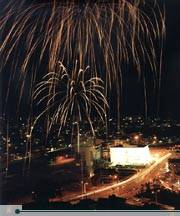
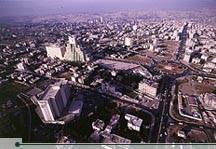
The seven hills of Amman are an enchanting mixture of ancient and modern. Honking horns give way to the beautiful call to prayer which echoes from the stately minarets which grace the city. Gleaming white houses, kabab stalls and cafés are interspersed with bustling markets—known in Arabic as souqs—and the remains of civilizations and ages long past. Sunset is perhaps the best time to enjoy Amman, as the white buildings of the city seem to glow in the fading warmth of the day. The greatest charm of Amman, however, is found in the hospitality of its residents. Visitors to Amman—and the rest of Jordan, for that matter—are continually surprised by the genuine warmth with which they are greeted. "Welcome in Jordan" is a phrase visitors will not soon forget.

Amman is built on seven hills, or jabals, each of which more or less defines a neighborhood. Most jabals once had a traffic circle, and although most of these have now been replaced by traffic lights, Amman’s geography is often described in reference to the eight circles which form the spine of the city. First Circle is located near downtown, and the series extends westward through Eighth Circle.

Amman is built on seven hills, or jabals, each of which more or less defines a neighborhood. Most jabals once had a traffic circle, and although most of these have now been replaced by traffic lights, Amman’s geography is often described in reference to the eight circles which form the spine of the city. First Circle is located near downtown, and the series extends westward through Eighth Circle.

The history of Amman between the end of its Biblical references (around 585 BCE) and the time of the Ptolemies is unclear. We do know that the city was renamed Philadelphia after the Ptolemaic ruler Philadelphus in the third century BCE. After coming under Seleucid and Nabatean rule, Philadelphia was taken by the Roman vassal King Herod in 30 BCE. The city became part of the Decapolis League, a loose alliance of ten Roman-ruled cities including Jerash, Gadara (present-day Umm Qais), Pella, Arbila (Irbid) and others. Under Roman rule, Philadelphia was replanned and reconstructed in typically grand Roman style with a colonnaded street, baths, an amphitheater and impressive public buildings.

During the Byzantine period, Philadelphia was the seat of a Christian bishop, and several expansive churches were built. The city declined somewhat during the late Byzantine years, and was overrun by the Persian Sassanians in 614 CE. Their rule was short-lived, however, collapsing before the Arabian armies of Islam around the year 635. The name of the city then returned to its Semitic origin of Ammon, or "Amman." It remained an important stop on the caravan routes for many years, but eventually trade patterns shifted and dried up the lifeblood of Amman. The city declined to little more than a provincial village for many centuries.

Amman’s "modern" history began in the late 19th century, when the Ottomans resettled a colony of Circassian emigrants there in 1878. Many of their descendants still reside in Amman. During that time and the early decades of the 20th century, the neighboring city of Salt was more important as a regional administrative and political center. However, after the Great Arab Revolt secured the state of Transjordan, Emir Abdullah bin al-Hussein made Amman his capital


Since then, the city has grown by leaps and bounds into a
modern, thriving metropolis of well over a million people. Amman’s growth has been driven largely by political events in the region, and especially by the Arab-Israeli conflict. After the wars of 1948 and 1967, successive waves of Palestinian refugees ended up in Amman. Moreover, the city’s population was further expanded by another wave of immigrants arriving from Iraq and Kuwait during the 1990-91 Gulf Crisis.


Sights of Interest
Most of Amman’s noteworthy historical sites are clustered in the downtown area, which sits at the bottom of four of Amman’s seven hills, or jabals. The ancient Citadel, which towers above the city from atop Jabal al-Qala’a, is a good place to begin a tour of the city. The Citadel is the site of ancient Rabbath-Ammon, and excavations here have revealed numerous Roman, Byzantine and early Islamic remains. The most impressive building of the Citadel, known simply as al-Qasr ("the Palace"), dates back to the Islamic Umayyad period. Its exact function is unclear, but it includes a monumental gateway, an audience hall and four vaulted chambers. A colonnaded street also runs through the complex. To the north and northeast are the ruins of Umayyad palace grounds.
Close to al-Qasr lie the remains of a small Byzantine basilica. Corinthian columns mark the site of the church, which is thought to date from the sixth or seventh century CE. About 100 meters south of the church is what is thought to have been a temple of Hercules, today also known as the Great Temple of Amman. The temple was built in the reign of the emperor Marcus Aurelius (161-180 CE), and is currently under restoration.
Also on Citadel Hill, just northwest of the Temple of Hercules, is the Jordan Archeological Museum. This small museum houses an excellent collection of antiquities ranging from prehistoric times to the 15th century. There is an exhibit of the Dead Sea Scrolls, a copy of the Mesha Stele (see Madaba section for explanation) and four rare Iron Age sarcophagi. Museum hours are 08:30-17:00 daily. On Fridays and official holidays the museum is open from 09:00-16:00.


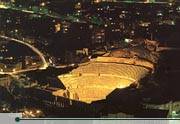
Downhill from the Citadel and five minutes walk east from downtown, the Roman Theater is the most obvious and impressive relic of ancient Philadelphia. The theater, which was built during the reign of Antonius Pius (138-161 CE), is cut into the northern side of a hill that once served as a necropolis—or graveyard. It is very similar in design to the amphitheater at Jerash, and can accommodate 6000 spectators. The theater is still used periodically for sporting and cultural events.


Two small museums are built into the foundations of the Roman theater. The Jordan Folklore Museum is in the right wing of the theater and displays a collection of items showing the traditional life of local people. At the other end of the theater stage, the Museum of Popular Traditions displays traditional Jordanian costumes, including fine embroidery and beautiful antique jewelry. It also houses several sixth-century mosaics from Madaba and Jerash. The Museum of Popular Traditions is open daily 09:00-17:00, and closed on Tuesday. The Jordan Folklore Museum is open every day from 09:00-17:00, except Friday when its hours are 10:00-16:00

To the northeast stands the small theater, or Odeon, which is still being restored. Built at about the same time as the Roman theater, this intimate 500-seat theater is used now as it was in Roman times, for musical concerts. Archaeologists think that the building was originally covered with a wooden or temporary tent roof to shield performers and audiences from the elements. Heading southwest from the theater complex, Philadelphia’s chief fountain, or Nymphaeum, stands with its back to Quraysh Street. Much of the fountain, which was completed in 191 CE, is hidden from public view by private houses and shops. The Nymphaeum is believed to have contained a 600 square meter pool, three meters deep, which was continuously refilled with fresh water. Jordan’s Department of Antiquities is currently excavating the Nymphaeum, and ultimately hopes to restore the site to its original structure by 2010.


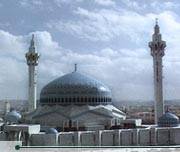
From the Nymphaeum, the short stroll to the King Hussein Mosque bustles with pedestrians, juice stands and vendors. The area around the King Hussein Mosque, also known as al-Husseini Mosque, is the heart of modern downtown Amman. The Ottoman-style mosque was rebuilt in 1924 on the site of an ancient mosque, probably also the site of the cathedral of Philadelphia. Between the al-Husseini Mosque and the Citadel is Amman’s famous gold souq, which features row after row of glittering gold treasures.

---