Saturday, August 9, 2008

Places To Visit In Germany

Wondering what places to visit in Germany? There are so many wonderful, historic sites to see that it's hard to say where to begin. Check out some of the most popular places to visit in Germany below.

Cologne Cathedral


The mighty cathedral towers in Cologne, Germany are just a stone's throw from the banks of the Rhine. Built over 600 years ago entirely in a high-Gothic style, it is Cologne's most famous landmark and an UNESCO World Heritage site. Its most sacred treasure is the Shrine of the Three Magi, a magnificent gilded sarcophagus thought to hold the remains of the Three Wise Men. More than 500 steps lead up the south tower, which offers a breathtaking panoramic view of the city.


------------------------------------------

King Ludwig II's world-famous castle stands proudly against the spectacular backdrop of the Alps in southern Bavaria. Neuschwanstein, his fairytale castle, is the most-visited building in Germany, and was designed to resemble a medieval German knight's castle. Walt Disney also found inspiration for his magic kingdom here and based his world-famous Disney Castle on this spectacular Bavarian highlight.


Abu Simbel (The Temple of Ramesses II)

--

Not only are the two temples at Abu Simbel among the most magnificent monuments in the world but their removal and reconstruction was an historic event in itself. When the temples (280 km from Aswan) were threatened by submersion in Lake Nasser, due to the construction of the High Dam, the Egyptian Government secured the support of UNESCO and launched a world wide appeal. During the salvage operation which began in 1964 and continued until 1968, the two temples were dismantled and raised over 60 meters up the sandstone cliff where they had been built more than 3,000 years before. Here they were reassembled, in the exact same relationship to each other and the sun, and covered with an artificial mountain. Most of the joins in the stone have now been filled by antiquity experts, but inside the temples it is still possible to see where the blocks were cut. You can also go inside the man made dome and see an exhibition of photographs showing the different stages of the massive removal project.
Abu Simbel was first reported by J. L. Burckhardt in 1813, when he came over the mountain and only saw the facade of the great temple as he was preparing to leave that area via the Nile. The two temples, that of Ramesses II primarily dedicated to Re-Harakhte, and that of his wife, Nefertari dedicated to Hathor, became a must see for Victorians visiting Egypt, even though it required a trip up the Nile, and often they were covered deeply in sand, as they were when Burckhardt found them.
--

Wednesday, August 6, 2008

Things To Do in London

We won’t try and write our own guidebook to London on this page. However, in no particular order, we and our kids enjoyed…


  • Hamley’s on Regent Street is one of the world’s largest and by far coolest toy stores in the world, much less London. It has a royal warrant, meaning it sells to the royal family, so when Great Grandma the Queen Mum (slogan: I’m Older than Yoda) bought a Power Ranger for her grandchild Prince William, it likely came from this store.
    There are entire floors full of stuffed animals, huge bears, fluffy everythings, excellent Paddington Bears and a zoo full of other creatures. The model shop has too cool for school kits from all over Europe, as well as Thomas the Tank Engine stuff to crowd a floor. We once saw Brian May, guitarist for Queen, and Eric Clapton, Guitarist for the Millennium, buying toys in Hamley’s. Harrod’s also has a nice toy selection, but to our minds with a bit less, well, whimsy.

  • More shopping is found at Selfridge’s department store on Oxford Street. If you can, go see them at Christmas for beautiful lights and an excellent, patient, Santa, despite our daughter’s efforts otherwise.
    Even during the other eleven months of the year, Selfridge’s exhales old, classic style, like some department stores in the U.S. used to do before everyone moved to the mall and parked next to a Sharper Image stores (“electric golf balls, we swear by them!”).
    We had a great time pretend-shopping, say for white gloves one would need if invited to tea at Buckingham Palace (the palace is open for tourists part of the summer, absent the Queen who departs for the time). Things are priced as you might expect, so buy that extra pair of socks across the street at Marks and Spencers. The basement of Selfridge’s was also used during WWII for some early computers, used then to break the German codes. There’s nothing of that left to see unfortunately, but the history is there.
  • The Royal Parks are pleasantly scattered throughout London, and one could make a full trip out of nothing more than comparing the parks, trying to see if watching the King’s Own Royal Horse Artillery tromping on horse back through Hyde Park (early in the morning) was a better treat than a free summertime Sunday afternoon band concert in Regent’s Park. Aw, heck, do both.

  • Regent’s Park was a favorite for us. It is contiguous with the London Zoo (our youngest daughter’s comment: it is not a sad zoo), has a rowboat rental place, is home to a zillion birds who enjoy being fed and offers wildly entertaining pickup football/soccer games on weekends.
    A word on the birds: they’ll eat bread, cookies, crackers and the like, though this is not always a good thing. If you have very little ones, be advised that the birds can get aggressive and frighten your child. They also poop alot (the birds, I mean) and you’ll need to be careful your child does not step into the greenish goo. The feeding has caused the bird population to grow, though this is not always a good thing (the poop problem again).
  • In the summer the Park hosts outdoor theatre. The house of the American Ambassador to the Court of St. James is literally in the Park. You can’t tour it, but you can get a peak over the fence of your tax dollars at work.
  • We also enjoyed Green Park as a quiet place with tall trees. Overlooking the park are many apartments and expensive hotels worth a peak. The park is also across the street from Buckingham Palace, and makes a nice place to have a picnic lunch after watching the changing of the guard in the late morning at the Palace.
    (When they fly the flag over the Palace, that means the Queen is inside that day; learn more at the
    Official Royal Web Site).
  • Hyde Park is also quite nice, with horse back riding trails (bring your own animal; no rentals I’m afraid), paddle boats to rent and of course, the famous Speaker’s Corner. The picture of our oldest daughter with the flowers on our touring page was taken in Hyde Park.

  • St. John’s Wood is a quick tube ride (Jubilee Line, ST JOHN’S WOOD station) from central London and worth a stroll if the weather is nice. It is a real, living neighborhood, albeit a generally well-to-do neighborhood.
    Within a few minutes walk from the Tube stop, you can find a wonderful high street with individual shops for the butcher, fruit, dry goods and the like, interspersed with a couple of nice pubs. Lords Cricket ground, the home of cricket, is nearby and Regent’s Park is about 10 minutes away.
    You can also walk from the tube to the Abbey Road crossing where the Beatles shot their album cover for “Abbey Road”. The recording studio is there, with Beatles graffiti written all over the front wall (the studio is still active, and we saw David Bowie go in one day; they also recorded Pink Floyd’s Dark Side of the Moon album there, along with many, many pop albums and movie soundtracks).
  • Of interest to parents with older children are the London Walks tours. You can pick up a brochure advertising the tours in most hotel lobbies. Conducted by out-of-work actors and generally loquacious and gregarious sorts, the tours walk you through themed treks on, under and around London. For those comfortable with the subject matter (and definitely not for young kids), the late night Jack the Ripper walk is not to be missed. They have daylight tours aplenty, many with quite clearly family oriented subject matter, to include Dickens, Shakespeare, the Inns of Court and much more.
  • While you might be the one person in this galaxy unfamiliar with Harry Potter, chances are you and your kids will recognize the name. If you’ve also enjoyed the Harry Potter movie, you might want to visit some of the real places in the UK where parts of the movie were filmed. Follow this link for the way to Hogwarts!

In their imaginations, children travel the world when they read such books as Madeline and A Bear Called Paddington. Make these imaginary journeys a reality for your children with visits to the actual settings of these and dozens more of the best-loved tales in children’s literature. Storybook Travels is the ultimate guide for book-loving parents in search of vacations the whole family will enjoy. Let Storybook Travels be your family’s companion on unforgettable excursions, including a magical walk through London looking for the mysterious spots young Harry frequents in Harry Potter and the Sorcerer’s Stone.

  • A new place we have heard about but not yet visited ourselves is the Discover Story Garden in Stratford. The park is open from from midday to 5:00 pm and is aimed at children 2-7 years old. The park is free and will be open every Saturday and Sunday afternoon throughout the year. In the Discover Story Garden, children can play and have fun in a safe, secure green space. They can slide down a monster’s tongue, climb the alphabet wall, play with boats in the stream, make music on the trellis and creep the willow tunnel. Details on line.

Sunday, August 3, 2008

Jordan Touristic Sites


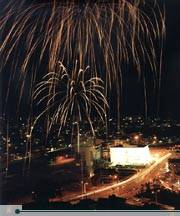
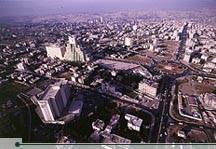
The seven hills of Amman are an enchanting mixture of ancient and modern. Honking horns give way to the beautiful call to prayer which echoes from the stately minarets which grace the city. Gleaming white houses, kabab stalls and cafés are interspersed with bustling markets—known in Arabic as souqs—and the remains of civilizations and ages long past. Sunset is perhaps the best time to enjoy Amman, as the white buildings of the city seem to glow in the fading warmth of the day. The greatest charm of Amman, however, is found in the hospitality of its residents. Visitors to Amman—and the rest of Jordan, for that matter—are continually surprised by the genuine warmth with which they are greeted. "Welcome in Jordan" is a phrase visitors will not soon forget.

Amman is built on seven hills, or jabals, each of which more or less defines a neighborhood. Most jabals once had a traffic circle, and although most of these have now been replaced by traffic lights, Amman’s geography is often described in reference to the eight circles which form the spine of the city. First Circle is located near downtown, and the series extends westward through Eighth Circle.

Amman is built on seven hills, or jabals, each of which more or less defines a neighborhood. Most jabals once had a traffic circle, and although most of these have now been replaced by traffic lights, Amman’s geography is often described in reference to the eight circles which form the spine of the city. First Circle is located near downtown, and the series extends westward through Eighth Circle.

The history of Amman between the end of its Biblical references (around 585 BCE) and the time of the Ptolemies is unclear. We do know that the city was renamed Philadelphia after the Ptolemaic ruler Philadelphus in the third century BCE. After coming under Seleucid and Nabatean rule, Philadelphia was taken by the Roman vassal King Herod in 30 BCE. The city became part of the Decapolis League, a loose alliance of ten Roman-ruled cities including Jerash, Gadara (present-day Umm Qais), Pella, Arbila (Irbid) and others. Under Roman rule, Philadelphia was replanned and reconstructed in typically grand Roman style with a colonnaded street, baths, an amphitheater and impressive public buildings.

During the Byzantine period, Philadelphia was the seat of a Christian bishop, and several expansive churches were built. The city declined somewhat during the late Byzantine years, and was overrun by the Persian Sassanians in 614 CE. Their rule was short-lived, however, collapsing before the Arabian armies of Islam around the year 635. The name of the city then returned to its Semitic origin of Ammon, or "Amman." It remained an important stop on the caravan routes for many years, but eventually trade patterns shifted and dried up the lifeblood of Amman. The city declined to little more than a provincial village for many centuries.

Amman’s "modern" history began in the late 19th century, when the Ottomans resettled a colony of Circassian emigrants there in 1878. Many of their descendants still reside in Amman. During that time and the early decades of the 20th century, the neighboring city of Salt was more important as a regional administrative and political center. However, after the Great Arab Revolt secured the state of Transjordan, Emir Abdullah bin al-Hussein made Amman his capital


Since then, the city has grown by leaps and bounds into a
modern, thriving metropolis of well over a million people. Amman’s growth has been driven largely by political events in the region, and especially by the Arab-Israeli conflict. After the wars of 1948 and 1967, successive waves of Palestinian refugees ended up in Amman. Moreover, the city’s population was further expanded by another wave of immigrants arriving from Iraq and Kuwait during the 1990-91 Gulf Crisis.


Sights of Interest
Most of Amman’s noteworthy historical sites are clustered in the downtown area, which sits at the bottom of four of Amman’s seven hills, or jabals. The ancient Citadel, which towers above the city from atop Jabal al-Qala’a, is a good place to begin a tour of the city. The Citadel is the site of ancient Rabbath-Ammon, and excavations here have revealed numerous Roman, Byzantine and early Islamic remains. The most impressive building of the Citadel, known simply as al-Qasr ("the Palace"), dates back to the Islamic Umayyad period. Its exact function is unclear, but it includes a monumental gateway, an audience hall and four vaulted chambers. A colonnaded street also runs through the complex. To the north and northeast are the ruins of Umayyad palace grounds.
Close to al-Qasr lie the remains of a small Byzantine basilica. Corinthian columns mark the site of the church, which is thought to date from the sixth or seventh century CE. About 100 meters south of the church is what is thought to have been a temple of Hercules, today also known as the Great Temple of Amman. The temple was built in the reign of the emperor Marcus Aurelius (161-180 CE), and is currently under restoration.
Also on Citadel Hill, just northwest of the Temple of Hercules, is the Jordan Archeological Museum. This small museum houses an excellent collection of antiquities ranging from prehistoric times to the 15th century. There is an exhibit of the Dead Sea Scrolls, a copy of the Mesha Stele (see Madaba section for explanation) and four rare Iron Age sarcophagi. Museum hours are 08:30-17:00 daily. On Fridays and official holidays the museum is open from 09:00-16:00.


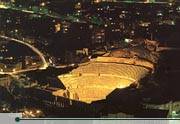
Downhill from the Citadel and five minutes walk east from downtown, the Roman Theater is the most obvious and impressive relic of ancient Philadelphia. The theater, which was built during the reign of Antonius Pius (138-161 CE), is cut into the northern side of a hill that once served as a necropolis—or graveyard. It is very similar in design to the amphitheater at Jerash, and can accommodate 6000 spectators. The theater is still used periodically for sporting and cultural events.


Two small museums are built into the foundations of the Roman theater. The Jordan Folklore Museum is in the right wing of the theater and displays a collection of items showing the traditional life of local people. At the other end of the theater stage, the Museum of Popular Traditions displays traditional Jordanian costumes, including fine embroidery and beautiful antique jewelry. It also houses several sixth-century mosaics from Madaba and Jerash. The Museum of Popular Traditions is open daily 09:00-17:00, and closed on Tuesday. The Jordan Folklore Museum is open every day from 09:00-17:00, except Friday when its hours are 10:00-16:00

To the northeast stands the small theater, or Odeon, which is still being restored. Built at about the same time as the Roman theater, this intimate 500-seat theater is used now as it was in Roman times, for musical concerts. Archaeologists think that the building was originally covered with a wooden or temporary tent roof to shield performers and audiences from the elements. Heading southwest from the theater complex, Philadelphia’s chief fountain, or Nymphaeum, stands with its back to Quraysh Street. Much of the fountain, which was completed in 191 CE, is hidden from public view by private houses and shops. The Nymphaeum is believed to have contained a 600 square meter pool, three meters deep, which was continuously refilled with fresh water. Jordan’s Department of Antiquities is currently excavating the Nymphaeum, and ultimately hopes to restore the site to its original structure by 2010.


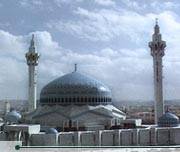
From the Nymphaeum, the short stroll to the King Hussein Mosque bustles with pedestrians, juice stands and vendors. The area around the King Hussein Mosque, also known as al-Husseini Mosque, is the heart of modern downtown Amman. The Ottoman-style mosque was rebuilt in 1924 on the site of an ancient mosque, probably also the site of the cathedral of Philadelphia. Between the al-Husseini Mosque and the Citadel is Amman’s famous gold souq, which features row after row of glittering gold treasures.

---

Saturday, July 26, 2008

Jordan Travel Overview


Petra, the jewel in the crown of Jordan's antiquities, has been declared by popular ballot one of the 'new' Seven Wonders of the World. The magnificent rock-hewn city of the Nabateans hardly needed further billing (since Jean Louis Burckhardt discovered it in the 19th century, it has been a favourite destination for Europeans) but at sunset on a winter's day, when the rose-pink city catches alight, it's easy to see why it has charmed a new generation of visitors.Not to be outdone by Petra's success, Wadi Rum, that epic landscape of Lawrence and Lean - 'Arabs' man' and moviemaker - is a contender as one of the Seven Natural Wonders of the World. Two such weighty accolades would be entirely disproportionate to the minimal size of Jordan.But Jordan, once an important trading centre of the Roman Empire and straddling the ancient Holy Land of the world's three great monotheistic religions, is no stranger to punching above its weight. Stand on Mt Nebo, newly consecrated by Pope John II, and survey the land promised to Moses; unwrap a scarf or two at Mukawir, where Salome cast a spell over men in perpetuity; float in the Dead Sea, beside a pillar of salt, reputed to be Lot's disobedient wife - go just about anywhere in Jordan and you'll find every stone bares a tale, and those of Madaba's legendary mosaics tell more tales than most.With so much history wrapped up in this tiny desert kingdom, it's easy to overlook the modern face of Jordan - something the new king is trying to address in ambitious developments at Aqaba and along the Dead Sea. In the meantime, the Bedouin still herd their sheep across an unchanged landscape in living continuity with the ancient past.

Abu Dahbi

Basking on an island flanked by bath temperature Gulf waters and white sandy beaches the city of Abu Dhabi's resort credentials speak for themselves. Towering skyscrapers and expansive shopping malls stand alongside ornate mosques and bustling souks, as old Arabic traditions and the modern world collide, making Abu Dhabi even more appealing. Those who delve beyond the Emirate's vibrant capital are rewarded by a lengthy coastline, over 200 offshore islands, voluminous desert sand dunes and the vaulting Hajar Mountains; not forgetting the myriad attractions of the city of Al Ain. Most visitors, however, are more than content to get active in and around Abu Dhabi city, teeing off at a golf course, taking a traditional dhow cruise, or simply trying the smorgasbord of watersports offered by beach clubs, resorts and hotels.

Who goes there?
Business people from other Arab countries comprise the majority of visitors to Abu Dhabi, however an increasing number of savvy holidaymakers from Europe are turning to Abu Dhabi.

Where in the world?
Abu Dhabi is the largest of the seven Emirates that comprise the United Arab Emirates (UAE). It occupies a north central position in the UAE. The city of Abu Dhabi is 32km (20 miles) east of the airport.The city of Abu Dhabi occupies a T-shaped island that protrudes into the Persian Gulf, as such it is surrounded by water. Beaches dot the city's coastline, which in turn are flanked by beach resort hotels and Abu Dhabi's commercial centre.
Beach
Whether you want to soak up the sun's rays, take a dip in the Persian Gulf or indulge in myriad watersports, including sailing, windsurfing and jet skiing, the best place to do this on one of the private stretches of beach that belong to Abu Dhabi's resort hotels. Public beaches are thin on the ground and typically don't have any facilities, although the busy Khalidiya Beach is a reasonable option.

Beyond the beach
Appreciate Abu Dhabi's dramatic setting as you amble along the striking Corniche. Admire the 19th century Qasr Al-Hosn Palace (Old Fort) and the triple-domed roof and minarets of the Grand Mosque, as well as the shimmering glass and steel skyscrapers that dominate the city's skyline. Take respite from the beating mid-summer sun in leafy landscaped parks, or air-conditioned shopping malls.

Family fun
Abu Dhabi's upmarket hotels were constructed with families firmly in mind. They typically have at least two swimming pools, as well as a host of water and land based recreational facilities. If you can drag the kids away from the pool, beach or tennis courts, hotels also boast child-friendly restaurants and babysitting services.

Retail therapy
Whether you want to haggle over the price of gold in a traditional souk (note that local custom dictates that you must buy anything that you have verbally agreed a price for), hunt down that perfect souvenir in a colourful bazaar, or pick up the latest designer fashions Abu Dhabi won't disappoint. For a stress free one-stop shopping trip make a beeline for one of the city's air-conditioned shopping centres, the biggest are Marina Mall (Corniche Road) (website:
www.marinamall.ae) and Abu Dhabi Mall (Tourist Club Area) (website: www.abudhabi-mall.com).

A night on the town
For locals and visitors alike, Abu Dhabi's nightlife revolves around its hotels. Here you can enjoy live music, smoke fruit flavoured tobacco through a shisha pipe or watch belly dancers. Stylish hotel bars are also a good place to relax over a cocktail, beer or glass of wine. Livelier nightlife can be found in hotel nightclubs.

Eating out
Standards in hotel restaurants are universally high so you don't have to travel far to enjoy a good meal in Abu Dhabi. The variety in the hotel dining scene, with everything on offer from sandwiches and snacks to fine-dining French style, may mean that you don't feel compelled to eat elsewhere, however venturing into the city's restaurants is worthwhile even if it is just to sample local specialities like lamb, chicken or shawarma (similar to a doner kebab). As a general rule alcohol is only served in hotel restaurants.

Getting around
Abu Dhabi has a comprehensive local bus service, including the airport to the city centre route, which operates around the clock. Taxis, which can be caught at ranks or hailed on the street, provide an efficient way of getting around the city of Abu Dhabi itself. Cars can be hired from rental offices at the airport, in downtown Abu Dhabi and in hotels.
Exploring further afield
In an Emirate renowned for the height of its sand dunes, a dune-bashing trip in the Liwa Oasis should not be missed. Enjoy the thrill of careering through the dunes from the comfort of an air-conditioned 4-wheel drive, safe in the company of an experienced driver.

Splashing out
Make a lasting impression at Sevillo's in the Millennium Hotel (Sheikh Khalifa bin Zayed Street, also know as Third Street) (website:
www.millenniumhotels.com). Locals and visitors flock to the terrace of this fine-dining Italian restaurant to lap up the stunning views of Abu Dhabi's skyline.

Flying in
Abu Dhabi International Airport (AUH)

Aberystwyth Arts Centre Guide

The award-winning Aberystwyth Arts Centre is part of the University of Wales Aberystwyth and is the largest and busiest arts centre in the whole of Wales. It underwent a massive redevelopment project in 2000 and today welcomes over 500,000 visitors each year. The centre hosts a wide-ranging programme of events, activities and workshops from across a variety of art forms. The venue includes the 900-seater Great Hall which opened in 1970 and the Exhibition Gallery and Theatre that was completed two years later. The refurbishment added or updated a number of facilities including a pottery studio, print room, darkroom, video suite, dance studios, studio theatre, recording studio and a new 120-seater cinema.
Contact Addresses
Aberystwyth Arts Centre, The University of Wales, Aberystwyth, Penglais Campus, Ceredigion SY23 3DE, Wales Tel: (0)1970 622882 Website:
http://www.aberystwythartscentre.co.uk/
Transportation
Air: Cardiff International Airport. Rail: Aberystwyth Station. Road: Bus: Public services.
Location
Aberystwyth Wales, United Kingdom

The Pyramids of Giza


The Pyramids of Giza are over 4500 years old. They were built as the burial places for Khufu, Khfare, and Menkaure, three Pharaohs during the Old Kingdom.
Each of the pyramids at Giza has a name; "Khufu's Horizon", Khafre is Great", and "Menkaure is Divine." As divine places, all the pyramids built through the ages are believed to have had names, even the small ones, and there are over 100 pyramids scattered around Egypt. One of my favorites is "Djedefre's Starry Sky."
The pyramids at Giza were not the first pyramids, but are the most enduring.
Despite the efforts of many people to dismantle and plunder them, they have survived to this day. They are visible proof of the superb mathematical, project planning, construction and organisational skills of the Ancient Egyptians.
In 2003 the village of the workmen who built the pyramids was discovered, offering final evidence that they were built by free citizens of ancient Egypt.
Their wonders were recorded by the Greeks and the Romans and they are the only remaining example of the Seven Wonders of the Ancient World.
They are located across the River Nile from Cairo on the West Bank. The area is called Giza and there is a village named Mena located quite close to the Giza Plateau which is the location of the Pyramids.
The Sphinx, the Solar Boat Museum and many mastaba (tombs) are located on around the pyramids. The Giza Plateau is a geographic feature that continues down to Memphis, Abusir and Saqqara, and most of the 100 pyramids were built on this formation. The Step Pyramid of Doser is located at Saqqara (Sakkara) and the Red and Bent pyramids of Senefru are located at Abusir.
The best time of day to see the Pyramids is the early morning, just after sunrise. There is a cool breeze off the desert and most of the other tourists are having breakfast.
The local villagers work at the Pyramids. They sell postcards, trinkets and camel rides. They run shops in the village which sell souvenirs and they work as guides to the sites. They dress up in their colorful Arab finery and decorate their camels so that you can photograph them. You must negotiate a fee for the photographs. These fees are called baksheesh and are a type of commission.
There is a spectacular evening light show. Your hotel or guide will know how to book tickets for you. The weblinks page includes a link to the company that produces this show. The web site includes a schedule for the Pyramids show and other sound and light shows around the country. This is quite handy, as the shows alternate in language. So you will want to book for a night that you can understand the narrative!

The Great Wall of China

The Great Wall of China was first ordered constructed by Emperor Qin during the Qin Dynasty to defend his realm against marauding nomadic tribes, and its construction continued throughout successive Chinese dynasties.
The part of the wall that still remains today formed part of the Silk Road route and was built during the Ming Dynasty. It stretches some 6,350km. Over the centuries, armies were garrisoned along the wall to provide early warning of invasion and a first line of defence. Contrary to belief, its purpose was not so much to deter the northern nomadic tribes and Manchus from entering China, but to prevent them from stealing property and escaping from China.
After the formation of the Qing Dynasty, the wall no longer had any functional use as the country was then ruled by the very people the wall was built to keep out. It then became a source of construction materials for nearby villages and towns, contributing to its deterioration and destruction.

Thursday, July 24, 2008

San Francisco Guide 1


Experience

Charismatic, progressive and frequently foggy, San Francisco is a compact city of hills surrounded on three sides by water. Hit the streets to experience the city's unique mix of big-city buzz and laid-back joie de vivre and check out the vibrant alternative scene.

See
Cycle, walk or drive across the iconic Golden Gate Bridge for spectacular views of the Bay and the city. The Museum of Modern Art – an architectural attraction in itself – presents an engaging programme of exhibitions, while a trip to the Cable Car Museum recalls the city's unique transportation history. Take a ferry to Alcatraz and experience the strange combination of solitary confinement and spectacular city views.

New
Visit the city's latest architectural marvel and cultural showplace, the brand-new De Young Museum in Golden Gate Park, and take in its outstanding collections of Californian and Pacific Islander art. Sample the sublime chicken mole (with spicy chocolate sauce) at the newly refurbished Roosevelt Tamale Parlor in the Mission. Wash down some edamame (soya beans) with Japanese whisky at Nihon, also in the Mission.

Spend
You can sift out the key clothing, jewellery, sporting equipment and art from the department stores and designer boutiques around Union Square. Find vintage clothing shops and funky, trendy places for shoes, art, CDs, and DVDs in upper Haight Street (aka the Haight-Ashbury), Valencia Street in the Mission, and Hayes Valley. Souvenirs, from the tacky to the tasteful, abound in the shops of Chinatown and Fisherman's Wharf.

Get Out
The vast Golden Gate Park is an oasis of green meadows, trees, flowers, lakes and trails, and home to the Californian art of the newly rebuilt De Young Museum. Hire skates or bicycles to make the most of its miles of smooth paths. To the west of the park lies China Beach, a quiet little stretch of sand at the edge of the Seacliff district, frequented by sunbathing locals (they take it all off at Baker Beach‘s nude strip at the northern end). Stroll among towering redwoods in Muir Woods, about 30 minutes north of the city, over the bridge in Marin County.

Culture
San Francisco's major performance venues are clustered around Union Square and the Civic Center, where you'll find the city's highly regarded theatre, ballet, opera and symphonic companies. Delve into the long-standing, vibrant music scene – with jazz and chamber music and hip-hop at venues such as Yoshi's in Oakland and the Great American Music Hall in the Tenderloin. Fans of stand-up comedy can find laughs at Cobb's and The Punch Line.

Eat & Drink
San Francisco is famous for its seafood, such as freshly steamed crabs at Fisherman's Wharf. Berkeley's Chez Panisse is the epicenter of Californian cuisine's local (often organic) artisanal cheeses and breads, and free-range meat. Inventive places such as Green's (at Fort Mason) keep vegetarians far from boredom. A thriving Latino community has created distinctive taqueria spicy salsas, grilled and marinated meats and fresh tortillas. The city's large Asian population means you're spoilt for choice for Chinese, Japanese, Thai or Korean.

New Perspective
Head for Coit Tower, where its not only the views from the top that will impress – the superb Depression-era murals inside the base of the tower tell dozens of stories about 1930s San Francisco and California.

Berlin Guide 1


Experience

The 20th century began and ended right here in Berlin. The German capital knows how to look backward and forward at once, how to roll up its sleeves and how to kick up its heels, how to remember and how to renew. Shaking off its heavy past, today Berlin is fast-changing, lively and fun.

See
Downtown Berlin is about the triumphs and tragedies of German hubris, with the Reichstag parliament building, the Brandenburg Gate and the Siegessäule victory column all within walking distance. Nearby, find Checkpoint Charlie – a remnant of the Berlin Wall – and the Jewish Museum, both signposts of the city's recent history. Sprinkled in between are the architectural marvels of the new foreign embassy buildings, which symbolise the hope of a born-again city.

New
In this constantly changing city, the recent opening of the Berlin Hauptbahnhof is a landmark event. The city's new central rail station – overlooking the Spree river and the centre of government – has become Berlin's main transport node, and the artery connecting north and south. A more sombre landmark is the Memorial to the Murdered Jews in Europe, opened in 2005.

Spend
You're guaranteed to go home with something you didn't even know you wanted. Berlin's obsession with novelty means the best in shopping here is in the scruffy, boho neighbourhoods such as Mitte, Nikolaivertel, Prenzlauer Berg and the emerging Friedrichshain. The best shops get by on a mix of charm, idiosyncrasy and original concepts.

Get Out
The rigours of winter make Berliners avid outdoors types. In the middle of the city is the Tiergarten, the city's vast green lungs. In the south-east, the city's largest lake is Müggelsee, where bathers can escape the summer heat.

Culture
The Berliner Philharmoniker is one of the world's great orchestras. Its Philharmonie home is in Mitte, where the Berlin Staatsoper (state opera) is also based. Equally highly rated is the Deutsch Oper Berlin in Charlottenburg. For something more contemporary, Prenzlauer Berg and Friedrichshain are dotted with live music venues, featuring everything from decadent Weimar-era cabaret to post-punk noise-art.

Eat & Drink
Go for classic downtown A-list favourites or sample the delicious Turkish flavours of Kreuzberg. With trendy Mitte and innovative Prenzlauer Berg in between, Berlin's restaurant, café and bar scene is so diverse and changes so fast it doesn't get a chance to grow stale. Ethiopian one year, Eritrean the next, Berliners draw on the world for culinary inspiration.

New Perspective
Take a ferry along the River Spree and see Berlin from below street level. Or admire the vistas from inside the new glass dome on the historic Reichstag building.

Egypt Landmarks: Karnak


When: Daily
Where: Karnak
Cost: EGP50; students EGP25
Opening Hours: Summer 6am-6pm; winter 6.30am-5.30pm


The monumental temple complex of Karnak is still, after 4000 years, the largest and one of the most impressive religious structures in the world.


In its heyday the temple was one of the supreme man-made glories on the planet, a city of gods and godlike priest-kings to the peasant population of Egypt.The complex, more akin to a whole city than to a series of temples, consists of three central temples, each dedicated to one of the patron gods of Thebes, a host of smaller temples dedicated to lesser deities and a vast sacred lake. You can easily spend days or weeks exploring the site, as it is incredibly vast, but for the highlights you're best off heading towards the central temple compounds.Dedicated to the Theban trinity of Amon, Mut and Khonsu, the Karnak complex was known as Ipet-isut, "most select of places", and took more than 2000 years to build. It is still the largest religious structure, or rather compound, ever made by mankind. It covers more than 200 acres of rooms, halls and corridors and the central temple of Amon-Ra could easily house St Peter's Basilica, the Milan Duomo and Notre-Dame cathedral. The Hypostyle Hall is the largest room of any religious building in the world, measuring 54,000 square feet, with 134 columns.There is also an impressive and popular Sound and Light Show that takes place here in the evening (conducted in three different languages) - useful for learning about the history of the site. As for the temple, arrive early in the morning (particularly during peak tourist season) if you want the chance to wander the complex without the company of countless coach parties.

Malta Travel Information


The Maltese archipelago, situated almost at the centre of the Mediterranean, includes the islands of Malta, Gozo, Comino, Comminotto and Filfla. It has made it an important strategic base since the earliest days of navigation, and thus has been visited by many cultures.The first significant civilisation here flourished in
St. George Basilica Gozo, Malta the third millennium BC, leaving behind fascinating megalithic temples. Later the island was occupied by the Phoenicians, the Carthaginians and the Romans.The Maltese islands have indeed been described as one big open-air museum. It is easy to delve into the islands' mysterious prehistory, retrace the footsteps of St Paul or see where the Knights of St John defended Christendom. Visitors can explore medieval walled citadels and splendid baroque churches and palaces.However, history alone does not draw the annual summer influx of tourists, who manage to triple the population of Malta. Visitors also come for the beautiful clear blue waters, secluded bays and sandy beaches, and also to glimpse the tranquil traditional villages that still speckle the landscape, celebrating lively fiestas.Malta's independence from Britain was achieved in 1964, and 40 years on Malta joined the EU in May 2004.

Tuesday, July 22, 2008

Travel Benefits Are Everywhere

Relationship, Educational, and Cultural Benefits

"Travel is fatal to prejudice, bigotry, and narrow-mindedness…Broad, wholesome, charitable views of men and things cannot be acquired by vegetating in one little corner of the earth all one's lifetime."
Mark Twain
􀂃 Women who take more vacations are more satisfied with their marriages. 28 That may be because:
o At least four out of ten travelers feel more romantic on vacation (42%), and nearly one-third admit to making love more often on vacation (31%). 26
o It could also be due to the fact that over half of employed Americans say they come back feeling reconnected with their family after vacation (53%). 29
􀂃 A clear majority of students who traveled on an international exchange program felt they had become more trusting, open-minded, flexible, confident, and tolerant as a result of their travel experiences. In addition, eight out of ten said that the primary benefit of these travels is a desire for more travel. 11
􀂃 Eight out of ten affluent leisure travelers consider vacations to be very important to their wellbeing (82%) and it’s easy to see why:
o More than half feel more rested and relaxed when they return from vacation (52%), and almost as many state they sleep later on vacation (49%). 26
The Benefits of Travel - 2008
􀂃 Even the anticipation of vacation travel generates an increase in positive feelings about one’s life as a whole, family, economic situation, and health. 22
􀂃 Life satisfaction also increases during vacation, and these effects continue after returning home, according to a study of employees at the University of Tennessee. 3
􀂃 Patients who had previously appeared isolated and withdrawn at a Midwestern Veteran’s hospital were able to have conversations after taking a vacation. In fact, staff reported that vacations appeared to "lift the aura of depression" that was part of the emotional trauma of dealing with prolonged illness. 8

Monday, July 21, 2008

Tourist Places of India

Tourist Zones of India
Multifaceted and multilingual in nature, India offers a huge array of tourist places to be explored. The shades of the nation compose of a number of communities, religions, and races. As a result, the tourist attractions in India are varied and numerous in nature. A study of the various tourist zones of India will be quite entertaining, allowing you to take a peek into the characteristic features of each and every zone of the country while you are on your tour to India. A discussion of the various tourist zones will give a clearer picture.


North Zone
North India refers to the set of states located on the non peninsular region of the republic of India. It includes Delhi, Jammu and Kashmir, Punjab, Uttaranchal, Himachal Pradesh, Rajasthan and Uttar Pradesh. North India has been a bystander of some of the major historical and cultural development in India over the past 3500 years. This region witnessed the evolution of Buddhism, Hinduism and Jainism. The sacred rivers Ganga, Brahmaputra and Yamuna along with numerous other rivers originate from the North. The Himalayas stretching from Himachal Pradesh to Arunachal Pradesh cut India off from the rest of Asia and safeguard the country. Another dominant geographical feature of Northern India is the vast Indo Gangetic plain. North India has been the historical center of many great Empires including the Mauryas, Guptas, Mughals and the Indian Empires under British Rule. The region has witnessed some of the biggest battles fought on Indian land. Outstanding monuments mark different places of North India, reminding us of the many empires that have ruled this country. The states of North India have rich and diverse ethnicity and customs. Monuments like the Red Fort and Humayun’s Tomb in Delhi and Taj Mahal in Agra are brilliant examples of Mughal Architecture. Qutub Minar built by Qutubbudin Aibak is another wonder of North India. The city of Jaipur in Rajasthan is known for its forts and palaces. Uttar Pradesh is home to some of the famous wild life sanctuaries in India.
North India forms a wonderful tourist destination due to its varied culture, religion, monuments, rivers, mountains, deserts, wild life, flora and climatic variations. Tourism of North India includes enchanting tourist destinations like Jammu and Kashmir, Delhi, Punjab, Himachal Pradesh, Uttaranchal, Rajasthan and Uttar Pradesh. Delhi, the capital of India, is a very important part of North India tourism. The city houses some of the most brilliant monuments like the Red Fort, Qutab Minar, India Gate, Jama Masjid, the Lotus Temple and The Parliament house. The city has some famous museums, namely, the National museum, the rail museum, the National Gallery of modern art and Gandhi museum. Himachal Pradesh is the abode of some of the best known hill resorts of India namely Kulu Manali, Shimla and Dharamshala. Jammu and Kashmir is known as paradise on earth because of it breathtaking beauty. Punjab, Uttar Pradesh and Uttaranchal are some of the other tourist destinations in North India. Rajasthan is one of the most colorful and vibrant states of India, dotted with numerous forts and palaces. One of the most famous tour packages of North India is the golden Triangle package which includes a tour of Delhi, Agra and Jaipur. Transportation to any state or city of North India is varied and convenient. The cities are very well connected to all the major cities around the world by airways, roadways and railways. All types of accommodation facilities are available at every corner of the cities. Normally transportation and accommodation facilities are included in the tour packages of North India


East Zone
Eastern India or “East India” comprises of the states of West Bengal, Bihar, Orissa and Jharkhand. This region lies between the North India and the North Eastern Part of India. This region is famous for its rich cultural heritage which is reflected in the temples and other monuments of architectural importance. This region has also many pilgrim centres for the Hindus, Buddhist and Jains. A tour to this region takes us to the architectural excellence that prevailed during the ancient and medieval India history. We at Touristplacesinindia.com provide you with complete information of all that you want to know about the history and culture in East India. The eastern part of India is famous for its beaches, temples, and Monasteries. The four major states in East India draw a large number of tourists from all around the world each year. The major attractions in these states are as follow: West Bengal: Kolkata, the Capital of the State served as the Capital of India during the British rule and was the source of all political powers during that time. The British rule in India saw a number of wonders in the city of Kolkata like the Howrah Bridge – one of the largest cantilever bridge in the world, the Victoria Memorial and the Indian Museum. Besides, there are also other places in Kolkata which are worth visit by every tourist. They include the St Paul’s Cathedral, Dakshineswar Kali temple, Kalighat, Belur Math, Science city to name a few. Other places of interest in West Bengal include the city Murshidabad, Rabindranath Tagore’s Shantiniketan, and the Mountainous beauty of the Darjeeling, Kalimpong, Kurseong and Mirik. Bihar: The landlocked state of Bihar is another attraction of the Eastern Part of India. This state is considered to be the land of Gautam Buddha, the founder of Buddhism. Nalanda, perhaps the world’s first seat of higher learning is located here. The Capital of the state, Patna, stands on the banks of the holy river Ganga. Some of the Buddhist and Jain sites in the state include the Vaishali, Patna, Rajgir, Pawapuri, Buddha Gaya, and Nalanda. There are also Muslim sites in and around the city, important among them include the Maner Sharif, Khankah Mujibia, Dargah Sharif, and Khankah Emadia to name a few.


West Zone


Western India comprises of the states of Goa, Gujarat and Maharashtra, and is primarily famous for places like Mumbai, Goa, Rann of Kutch, the cave temples of Ajanta and Ellora and the Wildlife Sanctuaries in Gujarat. Boasting of a rich cultural heritage, this part of the country houses some exemplary tourist sites including magnificent monuments, which are embodiments of the glorious architectural heritage of ancient India. Besides, the temperate climate in west India supports the growth of uniquely varied flora and fauna. Hence, some of the finest and best known wildlife sanctuaries are located in West India. The third largest state in India, Maharashtra overlooks the Arabian Sea and forms an integral part of West India. This coastal state presents a fine blend of tradition and modernity, and is home to several enchanting tourist attractions. Maharashtra’s rich cultural tradition is magnificently reflected in its palaces and monuments which lure hundreds of tourists to Maharashtra from all corners of the globe. Prominent among these monuments are the Gateway of India, Mumbai; Elephanta Caves, Mumbai, Aga Khan Palace, Pune; Aurangabad Caves; and the rock cut caves at Ajanta and Ellora. Home to some of the finest embodiments of rock-cut architecture, Ajanta and Ellora are archeological sites, lying about 30 km from Aurangabad in Maharashtra. This World Heritage Site is renowned for its monumental caves built by the Rashtrakutas and other ruling dynasties of ancient South India.


Lying on the western coast of India, Goa is one of the main states in West India and an endearing abode of scenic charm and beauty. A vacationer’s paradise, Goa presents an exhilarating combination of an unending expanse of spectacular beaches, sensuous golden sands, rich cultural heritage, varied flora and fauna, beautiful churches and magnificent temples. You simply don't need to look beyond the magical land of Goa for the perfect holiday, be it fun, adventure, sunshine, spirituality or just relaxation. No West India tour can be complete without a visit to the coastal state of Gujarat which flaunts the longest coastline (1290 km) in India. Home to some of the foremost tourist places in West India, Gujarat is known for its ancient temples, spectacular beaches, colorful people and the rich cultural heritage. The home state of Mahatma Gandhi, the Father of the nation, Gujarat boasts of beautiful temples, sunny beaches, the Rann of Kutch, several historic sites, well planned cities, national parks and sanctuaries. Touristplacesinindia.com offers online information on West India, tour packages of west India and tourist places in other parts of India.
South Zone
Experience the mystery and magic of south India tourism with its fascinating history, rich culture and traditions. As you go down to peninsular India, the fascinating land of temples unravels itself for you. The major destinations of south India include Tamil Nadu, Kerala, Andhra Pradesh, Karnataka, Lakshadweep, and Andaman& Nicobar Islands. Whether you are an adventure lover, pilgrim, or a wildlife enthusiast, south India has it all to enthrall you. The exquisite temples are the strongest lures and a wealth of south India. The historic monuments and temples can be found in large numbers in the states of south India. The intricately carved temples are feasts to the eyes and some of them you must visit include Guruvayoor Temple, Kalpathy Temple, Meenakshi Temple, Murugan Temple, Badami Cave Temple, Tirupati Tirumala Balaji and Saneeshwara Temple. These marvelous structures also stand testimony to the ancient heritage of the empires that greatly patronized the artistic pursuits. A trip to south India will remain incomplete without a visit to the palm fringed sandy beaches that accentuate the scenic charm of south India. The long coastline has conferred the south Indian states with numerous enchanting beaches and the most well-known among them being Alappuzha Beach, Kovalam Beach, Marina Beach, Kanyakumari Beach and Maravanthe Beach.
Apart from the beaches, south India is also well known for its captivating wildlife which attracts hordes of wildlife enthusiasts from all over the world. Watch the wild denizens roaming in their natural habitat freely along with a large number of migratory birds that frequent the protected forests of South India. Some of the acclaimed wildlife sanctuaries and national parks of south India are Periyar Wildlife Sanctuary, Kumarakom Bird Sanctuary, Calimere Wildlife Sanctuary and Bandipur National Park. The fairs and festivals of south India mirror the rich culture and tradition of the people of the region. Passed on from generations, these still are celebrated with utmost zest and excitement. You will find the people clad in their traditional attire and piously following the spectacular rituals. The festivities are marked by important occasions such as harvest, arrival of the monsoons and paying reverence to the worshipped deities. The famous ones are Onam, Aaranmula Boat Race, Pongal Festival and Natyanjali Dance Festival. A gratifying holiday is greatly dependent upon the accommodations and in south India, you will find a wide range of hotels and resorts to chose from. The various hotels located in important towns of south India and also provide resort and spa facilities. Kerala is a state that is particularly famous for its ayurvedic spa resorts. Some of the five star deluxe hotels in Chennai are Le Royal Meridien, Park Sheraton & Towers and Taj Coromandel. Likewise, you can find a number of hotels that are dotted in the other towns of south India too such as Kodaikanal, Coonoor, Kovalam, Bangalore, Hyderabad and Cochin. With almost limitless things to take delight in, you are certainly going to have unforgettable holidays in south India. Touristplacesinindia.com offers online information on the South India Tourism and also offers useful inputs on the other tourist destinations of south India.

Introduction to Egypt


No country on earth boasts a longer recorded history than does Egypt,the Eternal 'Gift of the Nile' as described by the Historian Herodotus.
Astatement astrue as today as it has been through seventy centuries of Egypt's unique history.

For long years,Egypt has remained traditionally the hub of tourists interested in the history and the valuable heritage of ancient Egyptian monuments spread all over the country.

Egypt enjoys a unique geographical location, at the juncture of Africa,Asia and Europe,and a favorable climate. Itpossesses a huge cultural heritage manifest in the Pharaonic,Roman, Coptic and Islamic monuments. It has clear skies and bright sunshine all the year round.
Recently,Egypt has embarked into comprehensive and diversified tourism,whereby a wide range of tourist's services are available.

A wide variety of tourist products and services have been introduced, in order to attract more tourists to the country such as water sports and the opening of new beaches in resorts offering a wide variety of facilities to tourists.

Tourism in Egypt is a mainstay and an essential pillar of economic activity,with tourist revenue representing about 25% of Egypt's total foreign currency income.With its outstanding tourist assets,Egypt has gained a unique competitive edge on world tourist map.

The tourism industry has witnessed huge leaps,since Egypt embarked into comprehensive tourism industry through diversified tourist products.

The tourism industry represents one of the most important features of the national economy formula. It has become the locomotive of the economic development process,since it secures 18% of the national income in foreign currency.
Indicators show that tourism industry has developed since the 1980's,particularly with the start of the successive five –year plans of the economic and social development which have been implemented incessantly.These plans aimed at setting up a huge and solid infrastructure, extended to the remote parts of the desert, the Red Sea coasts as well as Sinai,ending the remoteness of such areas from the valley.

Furthermore,suchareast urned into developmental economic centers and mainly in the tourism field. Moreover, investment and utilization of capitals flocked to these areas for establishing wonderful Yacht marina resorts,hotel facilities and high standard tourist locations.

All these factors led to a complete change in the Egyptian touristic product so as to embrace broader categories of world tourists. Now we can find several kinds of tourism of different tastes such as:monuments,marinas, recreation,religious purposes and desert safaris.Tourism in Egypt also satisfiesdifferent ambitions of tourists and which are widely needed nowadays such as Therapeutic, Conferences, exhibitions, environment and sports.This is besides the recreational and cultural activity that enriches the touristic product.

Since the 1990's,a new developmental policy was adopted by the issuance of Law no 7 for the year 1991 and the republican decree no 425 for the year 1992 and the setting up of the general organization for tourism development for the fulfillment of the planned and integrated development through the outstanding world and national expertise.

Investments in tourism domain
-Investment utilization in the tourism sector for the 2005/2006 years is estimated at L.E1974.6millions.
-Numbers of tourists for the year 2005/2006 reached 87 millions of tourists .Touristic nights are estimated at 85.7million in 2005/2006.
-Touristic revenues in 2005 /2006 amounted to $6429.

Hotels and Restaurants Sector
-Investments of this sector rose to LE 2,599 billion.The private and cooperative sector's contribution in this capital was LE 2 billion.
-Production of this sector reached Le 18593, 9 million for the year 2005/2006 periods.
-Employment in this sector embraced about 120.000 job opportunities for youth in 2005/2006.

Eiffel Tower

What can I say about this 324 m (1070 ft) high structure that hasn't been said before? Not much I guess, as everyone knows the Eiffel Tower. This world famous landmark was built in 1889 and was named after its designer, engineer Gustave Eiffel. It is now one of the worlds biggest tourist traps, but it still keeps in drawing the crowds, around 6,5 million people yearly. An amazing number;, which makes it all more the logical that the queues to go up the tower are so very long. And yes, I've been one of those people as well! On my first visit to Paris I just HAD to go up the tower. And I really enjoyed it! But that was probably mostly due to the fact of the idea it was the "Eiffel Tower" I went up, not especially because of the views from here. This second time I gladly skipped the long wait in line, and pleased myself by just looking at it from the front, the side and below. The structure still amazes me, so it was fun to be here a second time around. But I don't think I will ever go up there again. The queue on this bright sunny day was endless, 45 minutes a sign above the cash register said. I guess visiting Paris and especially the Eiffel Tower requires a bit of patience! ;-) While you stand and wait here in line, or just stare up at this enormous structure, do watch out of pickpocketers and scammers. An area like this, filled with tourists, is a gold-mine and dream come true for those who want to earn a buck or two from tourists. The police do seem to keep control over the area, as they were chasing a couple of scammers on bicycle when we were there.


Sunday, July 20, 2008

Where to Travel for Romance !

When you travel with romance in mind, the last thing you want is a disappointing getaway in a less-than-perfect place. The following destinations rate highly both with those who travel expressly for romance as well as with travel agents who specialize in booking romance vacations.
1 - HawaiiParadise in the Pacific, Hawaii is America's No. 1 travel romance destination.
2 - MexicoMexico offers coast-to-coast romance for those who travel south of the border.
3 - JamaicaTravel here for beautiful beaches and the largest selection of adults-only all-inclusives that nurture romance.
4 - TahitiA once-in-a-lifetime travel destination, Tahiti seduces visitors with its gentle beauty and surrounds them with gardenia-vanilla-coconut fragrances of romance.
5 - BermudaSynonymous with honeymoons and romance, pink-sand Bermuda is a lovely, safe travel destination.
6 - ItalyVenice, Florence, Rome, Milan, Naples, and Tuscany all flame the fires of passion for those who travel for romance.
7 - Las VegasLucky couples travel to Las Vegas for 24/7 fun, romance, laughs, and excitement.
8 - ArubaHurricane-free year round, the beaches and hotels of Aruba welcome those who travel for romance.
9 - St. LuciaOne of the Caribbean's lushest islands, St. Lucia offers couples who travel a combination of French-Creole warmth and romance plus English sophistication.
10 - FloridaEasy to reach, Florida isn't just for families with kids. You can travel to regions and resorts that appeal to those who prefer romance.